Markets · News
SpaceX Approaches $2 Trillion Valuation as AI Spending Faces Earnings Test
Ahead of third-quarter earnings, investors are weighing Starlink growth and AI infrastructure ambitions against capital intensity and a demanding stock valuation.
Why SpaceX is back in the spotlight
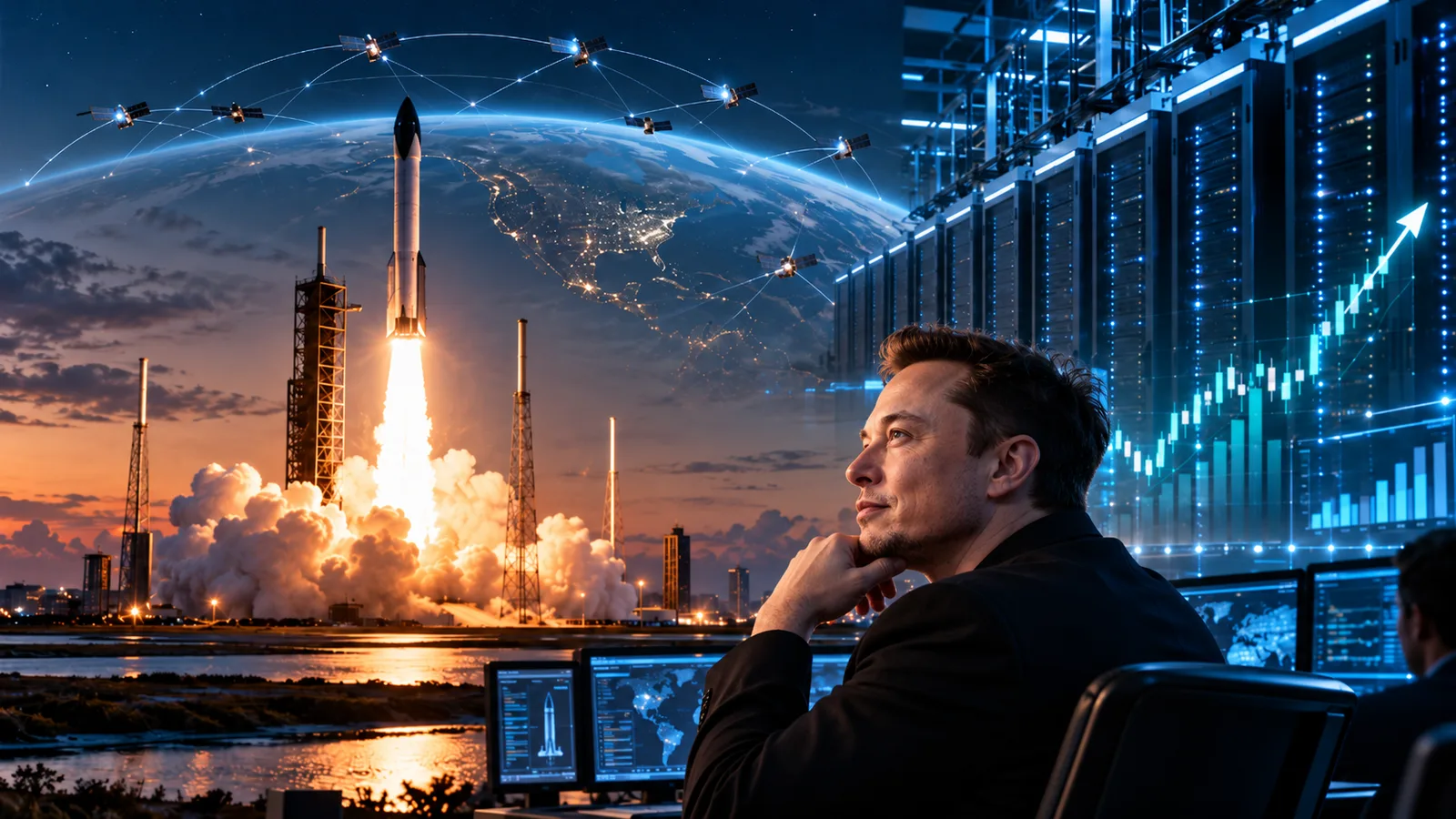
SpaceX faces an important test as investors prepare for its third-quarter 2026 results. The recently listed aerospace and connectivity company has moved far beyond rocket launches: satellite internet, artificial-intelligence computing and speculation about deeper ties with Tesla are increasingly central to the investment debate.
As of the 19 October 2026 US market close, SpaceX shares (Nasdaq: SPCX) traded at approximately $147.96, up 1.32% for the session, according to the market snapshot published by The Motley Fool. That source indicated an approximate $1.98 trillion market capitalisation. These are historical quoted figures, not live prices.
The striking valuation raises a question that cannot be answered by the company's technology achievements alone: can its operating cash generation eventually justify the scale of its investment plans?
From reusable rockets to a diversified technology business
SpaceX built its reputation around launch technology and reusable rockets. Its launch capabilities also help deploy Starlink, the satellite network designed to provide internet access across a wide geographic area. Having launch operations and satellite services under one corporate umbrella can create operational advantages, but it does not eliminate the costs of spacecraft manufacturing, network expansion and maintenance.
The company's strategy has broadened further through AI-related computing activities associated with xAI. These operations have different economics from satellite connectivity and launches. They require large investments in chips, data centres, power and networking infrastructure, and their profitability depends on sufficient paying customer demand.
The latest reported results — and what is still a forecast
The Motley Fool reported second-quarter 2026 revenue of $7.8 billion, an increase of 92% year over year, including $2.56 billion in AI-related revenue. These figures are attributed to that reporting rather than presented here as an independently audited reconstruction of SpaceX's financial statements.
The next earnings release will help investors compare those reported results with updated revenue, profit and investment figures.
Reuters reported on 19 October that analysts expected approximately $12.74 billion of Q3 revenue. That figure is an expectation, not a published Q3 result. Reuters also highlighted heavy AI investment and the significance of Starlink's growth when evaluating SpaceX's business outlook.
| Item | Reported figure or expectation | Important distinction |
|---|---|---|
| SPCX closing share price, 19 Oct 2026 | $147.96 | Dated market snapshot |
| Approximate equity market value | $1.98 trillion | Market estimate, not operating revenue |
| Q2 2026 revenue | $7.8 billion | Figure reported by The Motley Fool |
| Q2 2026 year-on-year revenue growth | 92% | Figure reported by The Motley Fool |
| Q3 2026 expected revenue | $12.74 billion | Reuters-reported analyst expectation, not actual results |
Different businesses, accounting treatments and the consolidation of acquired operations can affect year-on-year comparability. Investors should look for consistent disclosures before extrapolating short-term growth.
What does a valuation near $2 trillion imply?
A company's market capitalisation represents the stock market's aggregate equity valuation, not cash held by the company or annual sales.
Using the approximate $1.98 trillion equity value and the Q2 revenue figure of $7.8 billion annualised mechanically to $31.2 billion produces a ratio of about 63 times annualised quarterly revenue. This is an illustrative scale comparison only, not a standard trailing-twelve-month price-to-sales ratio. Annualising one quarter can be especially misleading when businesses are growing quickly or incorporating acquisitions.
A high valuation does not prove a stock is overpriced. But it raises the hurdle for future performance: customers must generate enough sustained revenue and profit to compensate for infrastructure investment, ongoing operating costs and the risks investors are taking.
Why the AI strategy matters
AI computing has the potential to add a major revenue stream beyond launches and satellite broadband. But revenue generated by selling computing capacity is not the same as free cash flow after acquiring and maintaining expensive equipment.
Investors need to separate three questions:
- Demand: Are customers signing commercially sustainable agreements and using the computing capacity they purchase?
- Economics: How much operating profit survives after power, chips, depreciation, networking and operating costs?
- Financing: How much additional debt, equity or other capital will be required before the infrastructure produces durable cash returns?
A business could report fast revenue growth while still providing disappointing shareholder returns if capital investment and financing costs rise faster.
Could SpaceX and Tesla merge?
Reuters reported growing market speculation about a possible transaction linking SpaceX and Tesla. Such a merger could have significant consequences for ownership, financing and strategy, but speculation is not an announced deal.
Potential synergies would need to be evaluated against dilution, shareholder approvals, governance, valuation and regulatory requirements. Until a formal proposal exists, it would be misleading to include a merger as an established fact or a guaranteed source of future earnings.
Analysts disagree about what the stock is worth
Opinion pieces published on 19 October illustrate that disagreement.
A Motley Fool contributor argued that the stock's demanding valuation could limit returns and predicted a share price near current levels by the end of 2027. Seeking Alpha published a more sceptical assessment under the headline “The $2 Trillion Conglomerate Built on Fragile Economics.” These are analysts' or contributors' opinions, not independently verified future price targets.
The central debate is not whether SpaceX has achieved meaningful technological milestones. It is whether the entire group will earn sufficient long-run cash returns to support its current market valuation.
What investors should watch next
| Development | Why it matters |
|---|---|
| Q3 revenue and segment disclosures | Whether fast growth is translating into recurring sales |
| Starlink customer and service expansion | Evidence of durable connectivity demand |
| AI infrastructure spending | Scale of reinvestment and potential funding needs |
| Profitability and cash generation | Whether growth creates cash after investment |
| Borrowing, share issuance and commitments | Potential costs and dilution for shareholders |
| Confirmed merger announcements, if any | Distinguishes transactions from market speculation |
The bottom line
SpaceX's growth opportunities are significant, but so are the expectations reflected in a valuation near $2 trillion. The upcoming earnings report could provide more evidence about Starlink demand and AI spending. It cannot, by itself, establish what the entire company is worth.
For investors, the essential test is whether rapid growth becomes sustainable free cash flow after the cost of launches, satellites, chips and data centres.
Published 19 October 2026. Historical quotations and analyst expectations are dated. This article is independent general financial reporting, not personal investment advice.
Sources & references
Found an error? Contact us with the source and the passage to correct.